

How to Choose the Right Trench Drain Grate for Your Project
A trench drain is only as good as the grate on top of it. These are four decisions to get it right:
- The load it carries.
- The material for where it lives.
- The style that suits the traffic.
- The format that suits the build.
1. Start with the load class
Every grate worth buying is tested to the Australian Standard, AS 3996:2019. The Standard sorts grates by load class, from pedestrian foot traffic up to heavy plant. Your job is to match the class to whatever crosses the drain.
| Class | Built for | Typical vehicles | Typical use |
|---|---|---|---|
| A | Pedestrians, no vehicles | Pedestrians and bicycles | Footpaths, walkways, plazas, landscaped areas |
| B | Light vehicles | Cars, 4WDs and light trucks | Residential driveways, car parks, light commercial |
| C | Light to medium rigid vehicles | Medium rigid trucks and buses | Commercial and industrial sites, service yards, access roads |
| D | Heavy rigid vehicles and plant vehicles | Heavy rigid trucks and mobile plant vehicles | Loading docks, hardstands, heavy-duty access roads |
Here is the part worth understanding: the Standard is deliberately conservative. A loaded 4WD weighs somewhere between 1,800 and 2,500kg, which is around 625kg per wheel. Class B is rated to 2,670kg per wheel, and both wheels are never sitting on the same grate at once. So a Class B grate carries a family 4WD with a large margin to spare. For the overwhelming majority of home driveways, Class B is the right answer.
Two rules make the choice easy:
- A grate can always step down a class, never up. A Class B grate is fine on a Class A footpath. A Class A grate is not fine on a driveway.
- If you are caught between two classes, go up. The price gap is small next to the cost of replacing a grate that was under-specified.
One thing to watch. If a grate is sold as "light", "medium" or "heavy" duty instead of a Class, it has not been load tested to the Standard. Every Buda grate that carries a class rating carries a test report behind it. On commercial work, confirm the class with your engineer before you order.

2. Then choose the material
Material is decided by where the drain lives and what hits it: water, salt, chlorine, sun, traffic. Five paths cover almost every job.
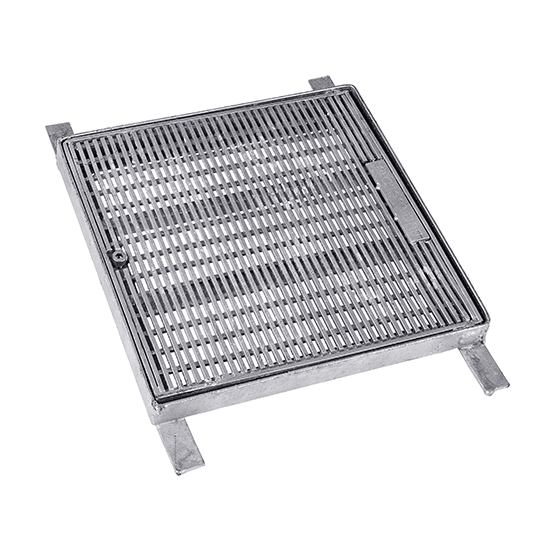
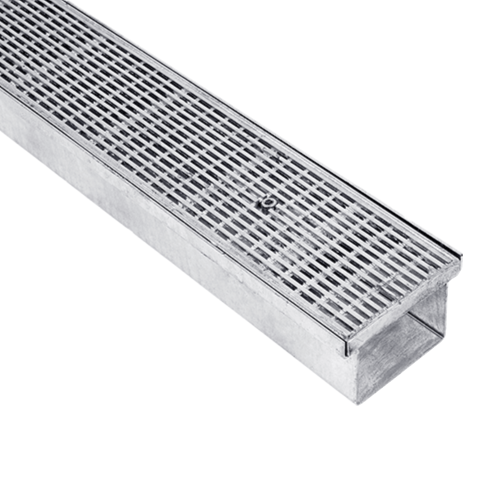
Hot-dip galvanised steel. The workhorse. Strong, affordable, and available right across Class A to Class D. It is the go-to for driveways, schools, car parks and industrial yards. Two rules: keep galvanised away from pools, where salt and chlorine attack the coating, and never clean it with acid, which strips the galvanising. Budaguard™, Maxi-Heelguard™, Builders Guard™, Traditional and Megaguard™ are all galvanised.
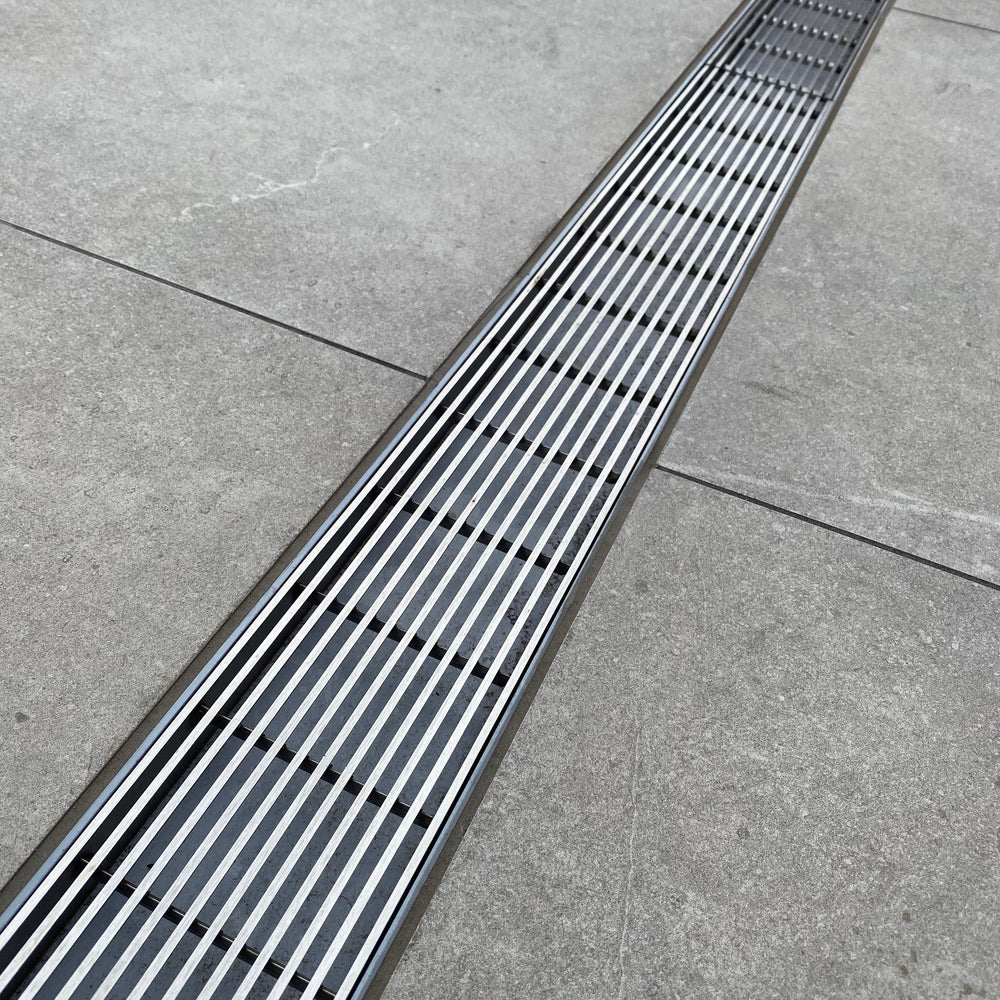
316 stainless steel. The premium external choice. The strongest corrosion resistance we stock, the cleanest look, and the right call anywhere near the ocean, where salt air goes to work on galvanising. Pools, coastal homes, and high-end residential and commercial finishes.
304 stainless steel. The stainless look at a lower price, for internal areas and around (not inside) a pool. It is fine on pool-adjacent walkways and surrounds. Where the drain directly collects pool water, step up to 316.
Anodised aluminium. The most affordable grate we carry. Right for balconies, patios, walkways and light pedestrian areas. It comes in a slotted style and is a pedestrian-only, Class A product. Not for pools.
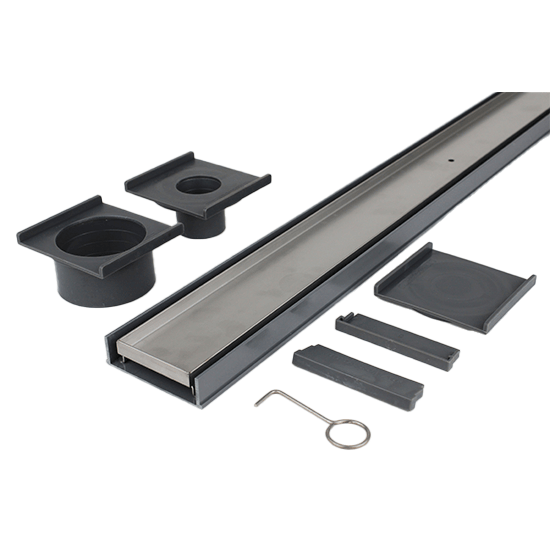
Plastic base with a 316 stainless steel top. A kit that gives you a pool-grade stainless top without the cost of a full stainless channel. Watermark approved, and supplied with the accessories you need to install it. A smart middle ground around pools, balconies and patios.

3. Now choose the grate style
Style is not just looks. It decides whether the drain is safe to walk on and how much water it moves.
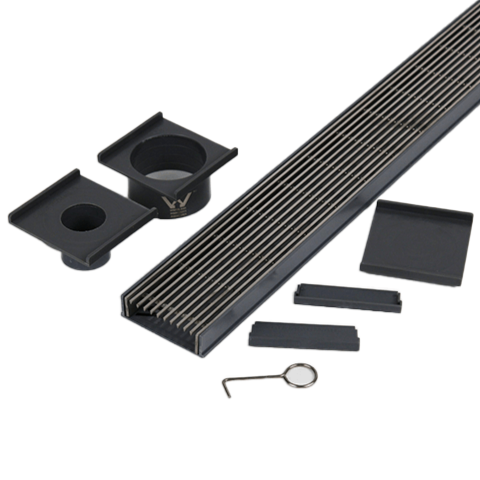
Heelguard is the one to understand first. A heelguard grate has gaps under 10mm, narrow enough that a heel, a walking stick, a scooter wheel or a dog's paw cannot drop through. Anywhere people cross the drain, it should be heelguard. The styles below are the ways we build it:
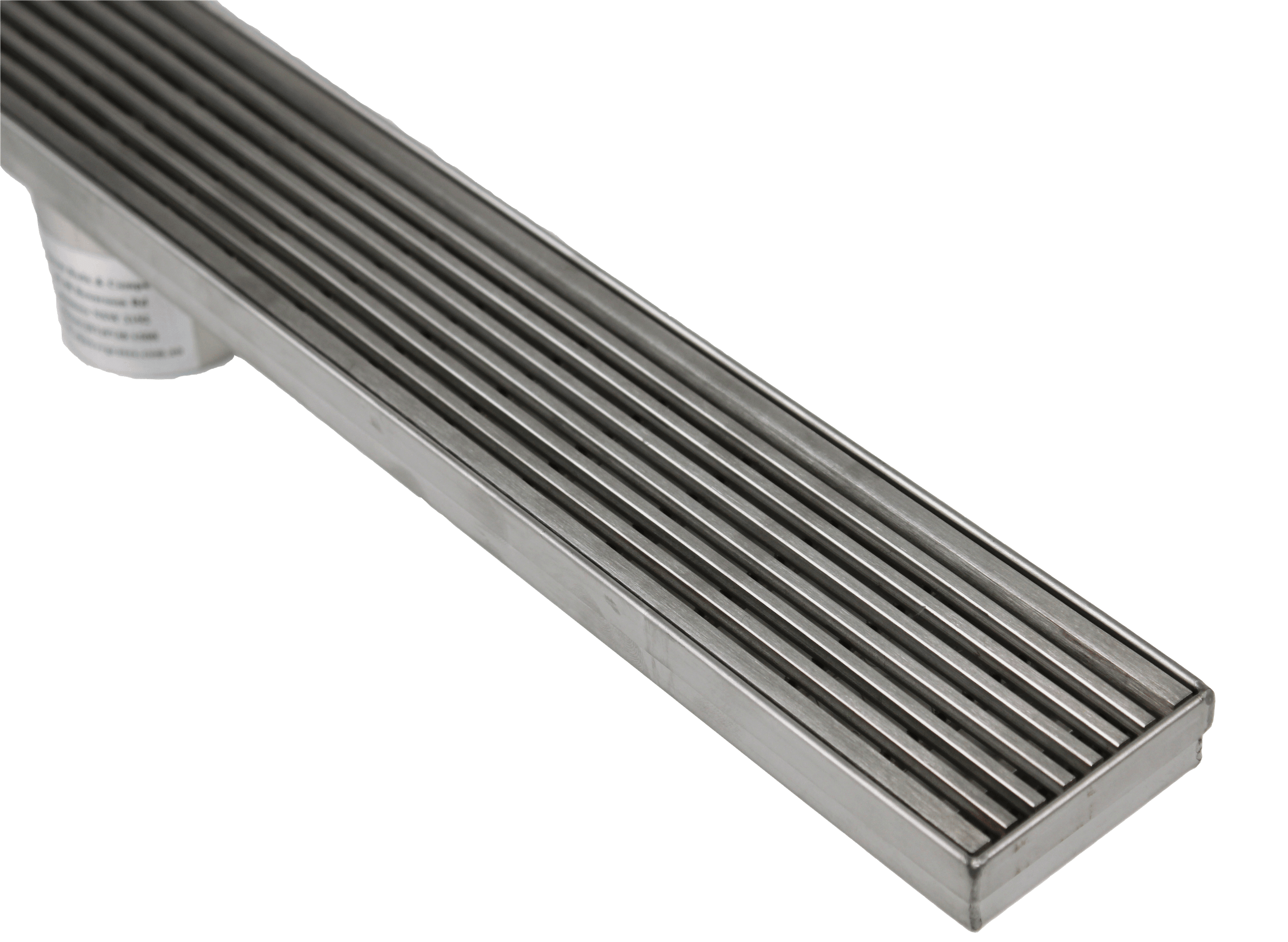
- Budaguard™. Our wedge wire heelguard, and the premium grate in the galvanised range. The best-looking and strongest of the galvanised styles, load tested and anti-slip tested to AS 3996:2019.
- Maxi-Heelguard™. A wider square-bar heelguard, wider gaps but still heelproof. Galvanised, Class B, a common driveway pick.
- Builders Guard™. Heelproof on a budget. A slotted mesh welded over a traditional grate, galvanised and Class B.
- Traditional. Flat and twisted bar cross-welded together. The largest gaps, the most water flow, and the most economical galvanised grate. Best where there is no heel traffic to worry about.
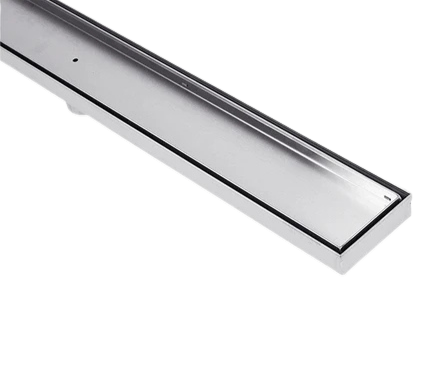
- Tile insert. A tray you fill with your own tile or paver so the drain almost disappears into the floor. Chosen for a minimal look, not for high water flow.
- Megaguard™. The Class D heavy-duty style, also heelproof. Built for commercial driveways and plant traffic.
One rule sits above all the styles: a grate must lock or bolt down. A grate held in place by its own weight will rattle, lift and walk out of its frame. Every Buda grate bolts to its channel or frame.

4. Grate, frame or channel: the part under the grate
The grate is half the system. What sits under it depends on how you are building.
- Grate. The grate on its own. Order it alone to replace a worn or damaged grate, or to suit a frame or channel you already have.
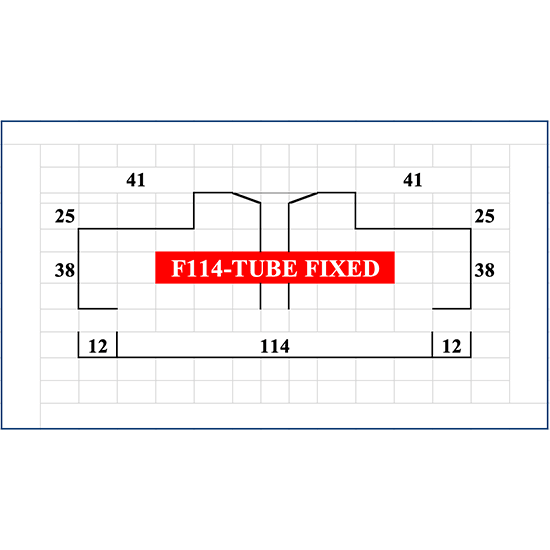
- Grate and Frame. The grate plus the frame it bolts into. You form the channel out of concrete to whatever depth the job needs, and the frame casts in so the grate bolts down. The choice for deep runs or restricted depth.
- Channel. A pre-formed channel that the grate sits in, supplied ready to install. You set it in and pour around it. This is the everyday driveway drain.
A finished drain also needs its accessories: an outlet to connect the pipe, end caps to close the run, joiners between lengths, and a strainer to keep debris out of the line. Tell us the run and we will tell you exactly what it needs.
Quick pick by project
| Your project | Where to start |
|---|---|
| Home driveway | Budaguard™ or Maxi-Heelguard™, Class B galvanised |
| Driveway on a budget | Builders Guard™ or Traditional, Class B galvanised |
| Around a pool | 316 stainless steel, or plastic base with a 316 stainless top |
| Coastal or beachside | 316 stainless steel |
| Balcony or patio | Anodised aluminium, or 316 stainless heelguard for the premium look |
| Footpath or landscaped area | Class A galvanised mini-heelguard or stainless |
| Commercial driveway, loading dock, plant | Megaguard™, Class D |
| Minimal, tiled-in finish | Tile insert, stainless or galvanised |
The Summary
Match four things and the project will run smooth: the load that crosses the drain, the material for where it lives, the style for the traffic and the look, and the format that suits how you are building. A heelguard grate where people walk, the right class for what drives over it, stainless or plastic-base near water, and a grate, frame or channel to match the pour. Specify those correctly and the drain will outlast everything poured around it.
Not sure which way to go on your job? Send us the details and we will spec the grate, the channel and the accessories for you.
Trust the Buda, since 1957. Visit buda.com.au or call us today.